





What Is a No-Teaching Welding Robot?
As manufacturing industries face increasing pressure to improve productivity, maintain consistent weld quality, and reduce dependence on manual operations, robotic welding automation is becoming an important part of modern production.
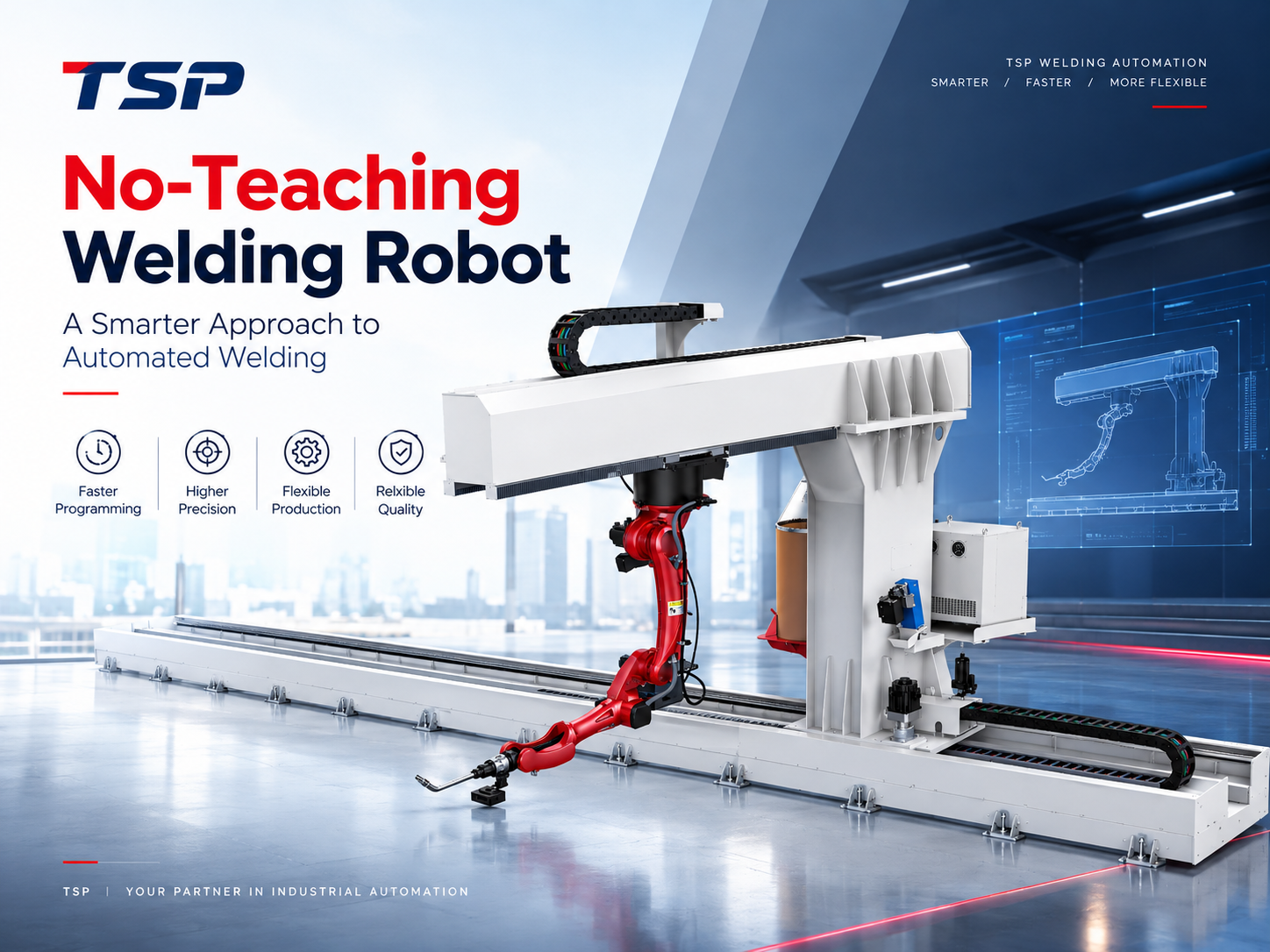
A no-teaching welding robot is a welding automation solution designed to reduce or eliminate the need for traditional manual point-by-point robot teaching in suitable applications. Instead of manually guiding a robot through every welding position, operators can use supported programming methods, such as offline programming, CAD-based path generation, or intelligent path planning, to generate welding trajectories more efficiently.
Compared with conventional robotic welding systems that rely heavily on manual teaching, a properly configured no-teaching welding robot can simplify programming workflows and help manufacturers adapt to changing workpieces and production requirements.
At TSP, we are expanding our industrial automation portfolio with no-teaching welding robot solutions designed for manufacturers seeking more flexible, efficient, and intelligent welding processes.
How Does a No-Teaching Welding Robot Work?
Traditional robotic welding often requires an operator to teach welding points and paths using a teach pendant. For complex workpieces or frequent product changes, this process can consume considerable setup time.
A no-teaching welding robot uses alternative programming and path-generation methods to simplify this process. Depending on the system configuration, the workflow may include the following steps.
1. Workpiece Model or Process Data Input
The operator provides the required workpiece information. This may include a CAD model, dimensional data, a predefined welding program, or other supported production information.
2. Welding Path Generation
The software generates or assists in generating the robot’s welding trajectory based on the workpiece geometry, welding joints, and process parameters. Some systems may also support automatic seam recognition or vision-guided path planning.
3. Simulation and Collision Checking
The generated trajectory can be reviewed in a simulation environment, where supported, to identify potential collisions, reachability issues, and programming problems before actual welding begins.
4. Robot Execution and Process Verification
After the program is transferred to the robot, the operator verifies the workpiece positioning, welding parameters, safety conditions, and initial weld quality before production.
The exact workflow depends on the robot, software, sensing technology, and integration configuration. No-teaching does not necessarily mean that an operator is never required; workpiece setup, calibration, parameter adjustment, and quality inspection may still be necessary.
Key Advantages of No-Teaching Welding Robots
1. Reduced Programming and Setup Time
One of the main advantages of a no-teaching welding robot is the potential to reduce the time required to create or modify welding programs.
In traditional robot teaching, operators may need to guide the robot through multiple welding points. For suitable applications, offline programming or automated path generation can simplify this process, helping manufacturers prepare new jobs more efficiently.
This is particularly valuable for manufacturers handling multiple product models, customized components, or frequent production changes.
2. Greater Flexibility for Different Workpieces
Manufacturing requirements are rarely identical across every production run. Different workpiece dimensions, joint configurations, and welding positions can make manual robot programming time-consuming.
A no-teaching welding robot equipped with appropriate programming software can help manufacturers adapt welding paths to different workpieces without manually reteaching every point from scratch.
This flexibility can be beneficial for machinery manufacturing, metal fabrication, steel structures, and customized metal products.
3. More Consistent Welding Operations
Manual welding quality can vary depending on operator experience, working conditions, and production fatigue. Robotic welding helps execute programmed paths and welding parameters consistently.
When combined with suitable fixtures, process control, and quality inspection, a no-teaching welding robot can support repeatable welding operations and more standardized production processes.
Actual weld quality depends on material type, joint preparation, fit-up accuracy, welding parameters, equipment configuration, and operator supervision.
4. Improved Production Efficiency
Reducing programming preparation time can help manufacturers make better use of their robotic welding equipment, particularly when producing multiple workpiece types in smaller batches.
Depending on the application, welding automation can also reduce repetitive manual work and help production teams organize their workflows more efficiently.
The actual improvement in productivity should be evaluated according to the workpiece, welding cycle, changeover frequency, and overall production layout.
5. Lower Dependence on Manual Robot Teaching Skills
Traditional robotic welding may require personnel who understand robot coordinate systems, teach pendants, welding paths, and motion programming.
No-teaching solutions aim to make programming more accessible through software-assisted workflows and simplified operation. However, personnel still need appropriate training in welding processes, robot safety, equipment operation, and quality control.
The goal is not to remove skilled workers from manufacturing, but to help them spend less time on repetitive programming tasks and more time on process optimization and production management.
No-Teaching Welding Robot vs. Traditional Robotic Welding
Both technologies can improve welding productivity, but their programming workflows differ.
| Comparison | Traditional Robotic Welding | No-Teaching Welding Robot |
|---|---|---|
| Programming method | Commonly uses teach-pendant programming | May use offline programming, automated path generation, or other supported methods |
| Path creation | Often requires manual teaching of robot points | Can reduce manual point-by-point teaching in suitable applications |
| Product changeover | May require additional manual programming | May simplify program generation for supported new workpieces |
| Operator skills | Robot teaching and welding process knowledge are important | Software operation, process knowledge, and robot safety skills remain necessary |
| Application suitability | Well suited to stable, repetitive production | Potentially advantageous for flexible production and frequent product changes |
| System requirements | Depends on robot and welding configuration | Depends on available software, sensing, calibration, and integration capabilities |
The best solution depends on the production environment. For high-volume manufacturing with stable workpieces, traditional robotic welding may remain highly effective. For manufacturers facing frequent changes in product geometry or welding tasks, no-teaching technology may offer additional flexibility.
Applications of No-Teaching Welding Robots
No-teaching welding robots can be considered for a range of industrial welding applications, provided the robot’s reach, payload, welding process, software, and workpiece requirements are compatible.
Metal Fabrication
Manufacturers producing metal frames, brackets, enclosures, and fabricated components may benefit from simplified programming when workpiece designs change frequently.
Steel Structure Manufacturing
Steel structures often contain multiple joints and varying component geometries. Suitable offline programming or path-generation solutions can help prepare welding programs for complex structures.
Construction Machinery and Equipment
Manufacturers of machinery frames, structural parts, and equipment housings can explore robotic welding automation to standardize repetitive welding tasks and improve production planning.
Agricultural Machinery
Agricultural equipment frequently includes welded frames, supports, and structural components. Robotic welding can support repeatable production when the parts and fixtures are suitable for automation.
Customized Metal Products
For manufacturers producing small batches or customized components, reducing the effort involved in programming each new workpiece can be especially valuable.
Important: The suitability of no-teaching welding depends on the system’s actual capabilities. Complex joints, reflective surfaces, inconsistent fit-up, changing workpiece positions, and difficult welding conditions may require additional sensing, calibration, manual intervention, or process-specific engineering.
What Should You Consider When Choosing a No-Teaching Welding Robot?
Selecting the right welding automation system requires more than comparing robot specifications. Manufacturers should evaluate the complete application.
1. Workpiece Geometry and Size
Confirm that the robot’s working envelope, travel range, and mounting arrangement can accommodate the dimensions and shape of your workpieces.
2. Welding Process and Materials
Identify the required welding process, base materials, material thicknesses, joint types, and expected welding quality.
3. Programming Method
Ask whether the system supports CAD-based programming, offline programming, automatic welding path generation, vision-guided seam detection, or other functions relevant to your production needs. These capabilities are not automatically included in every no-teaching robot.
4. Production Volume and Product Variety
Consider the number of workpiece models, batch sizes, changeover frequency, and current programming workload. These factors help determine whether a no-teaching solution can deliver practical value.
5. Integration and Safety
Evaluate compatibility with welding power sources, fixtures, positioners, external axes, sensors, safety devices, and existing production systems.
6. Technical Support and Training
Reliable technical support, application assessment, commissioning, and operator training are important for successful robotic welding implementation.
Why Explore TSP No-Teaching Welding Robot Solutions?
TSP is expanding its industrial automation product portfolio to serve manufacturers seeking practical welding automation and intelligent manufacturing solutions.
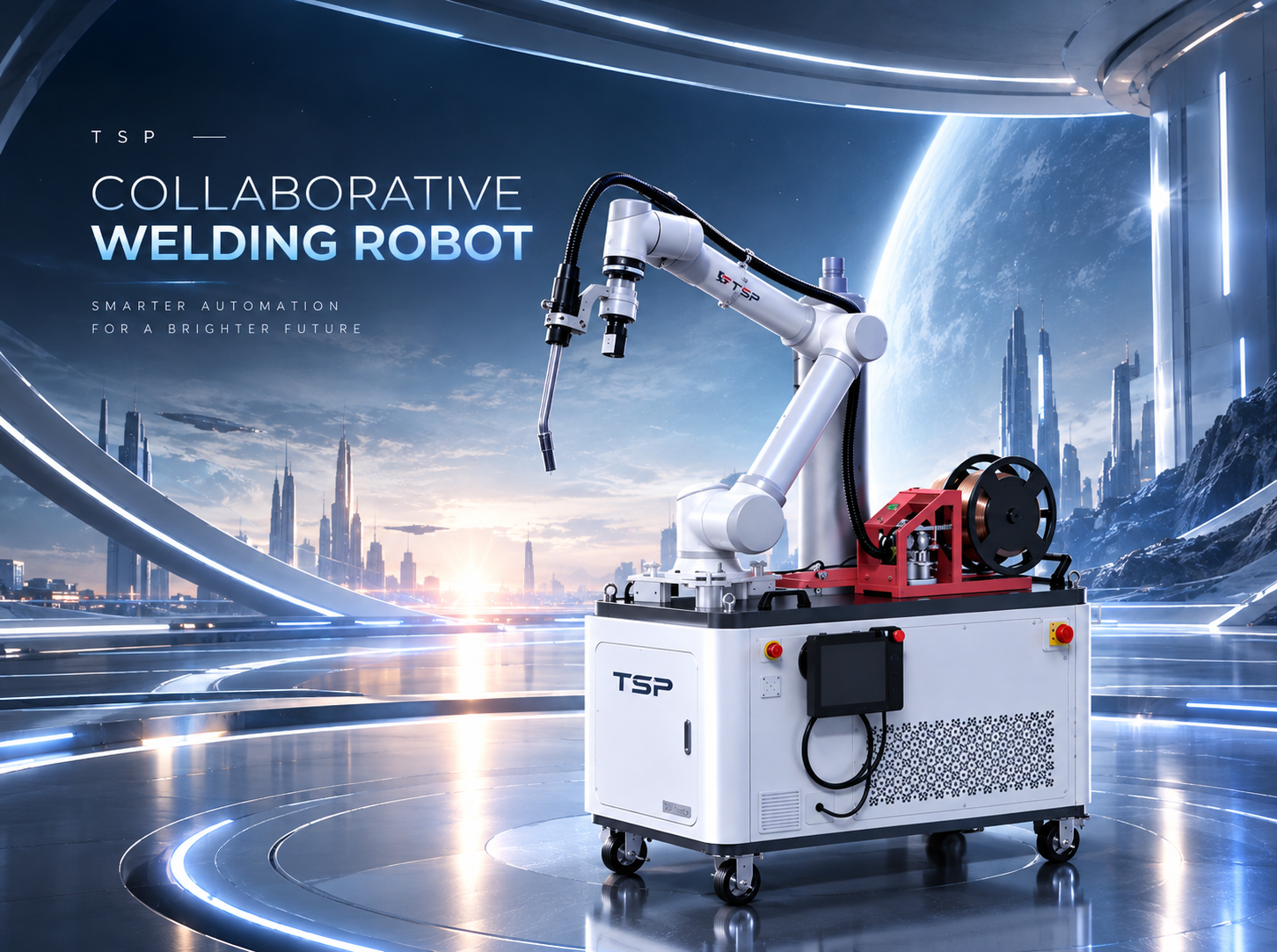
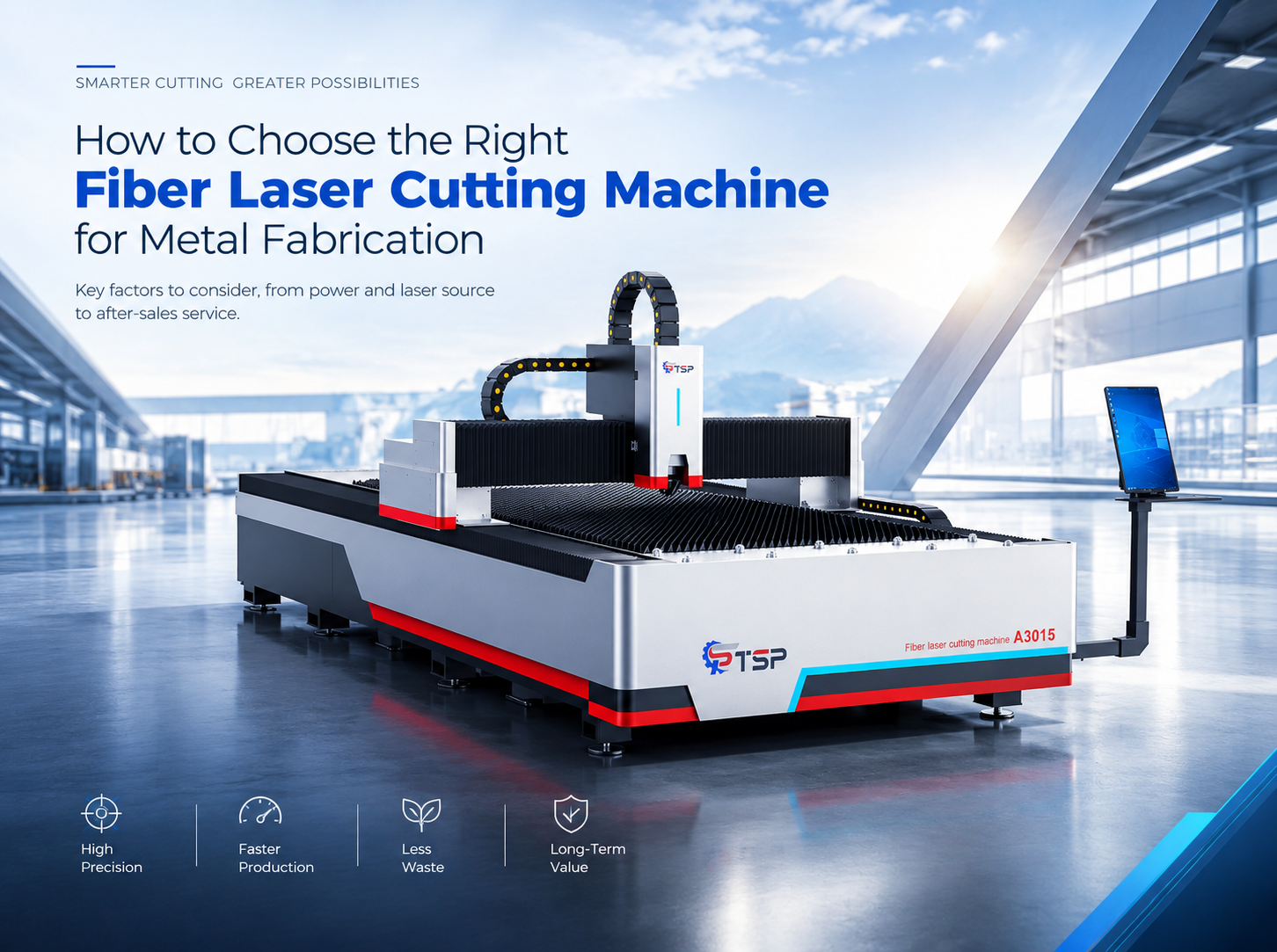
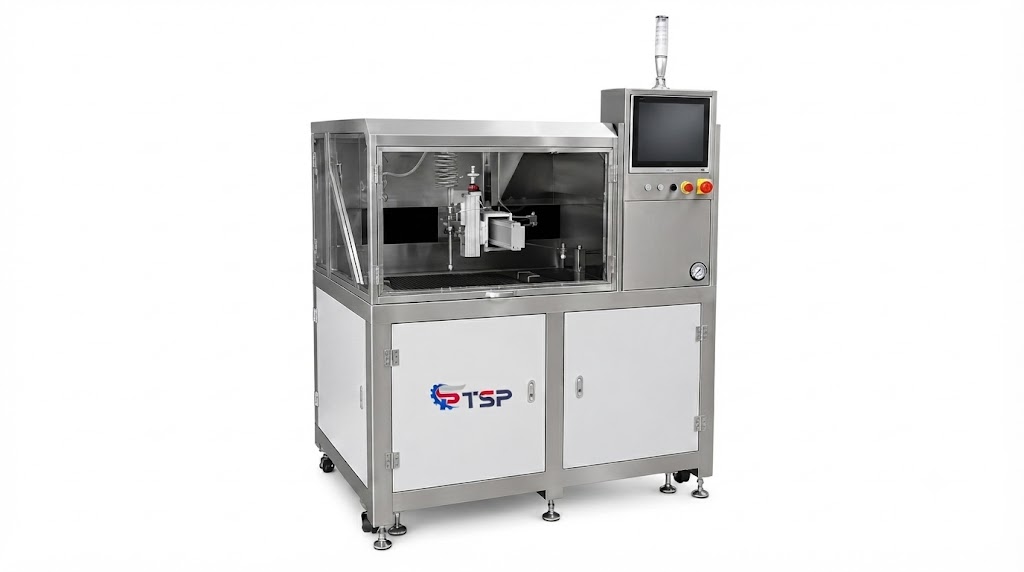
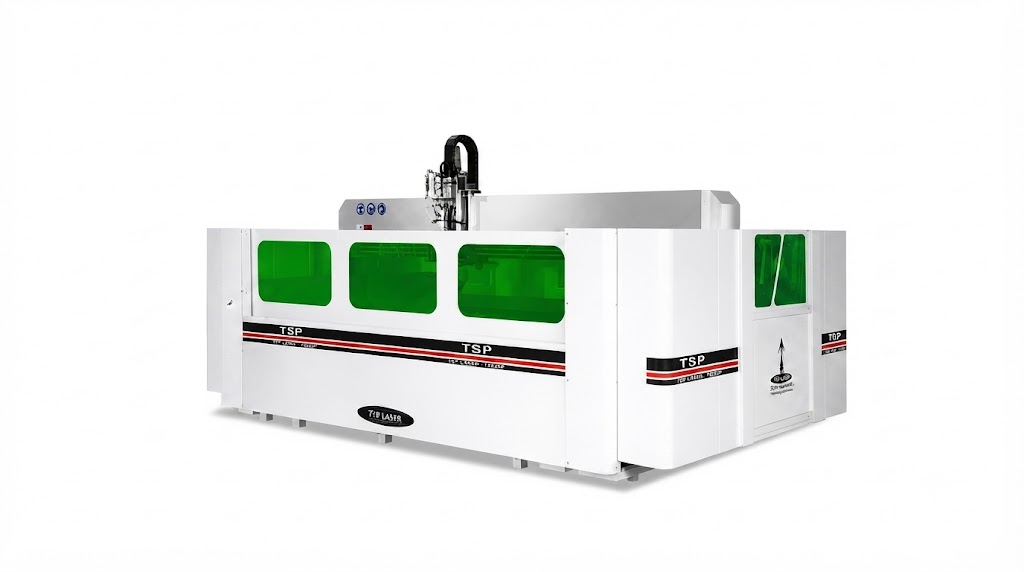
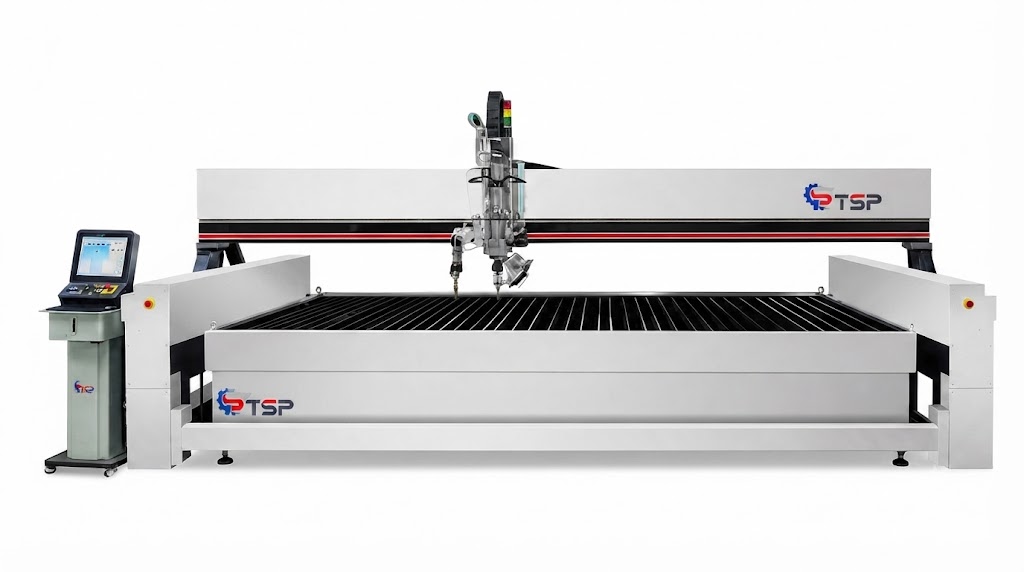
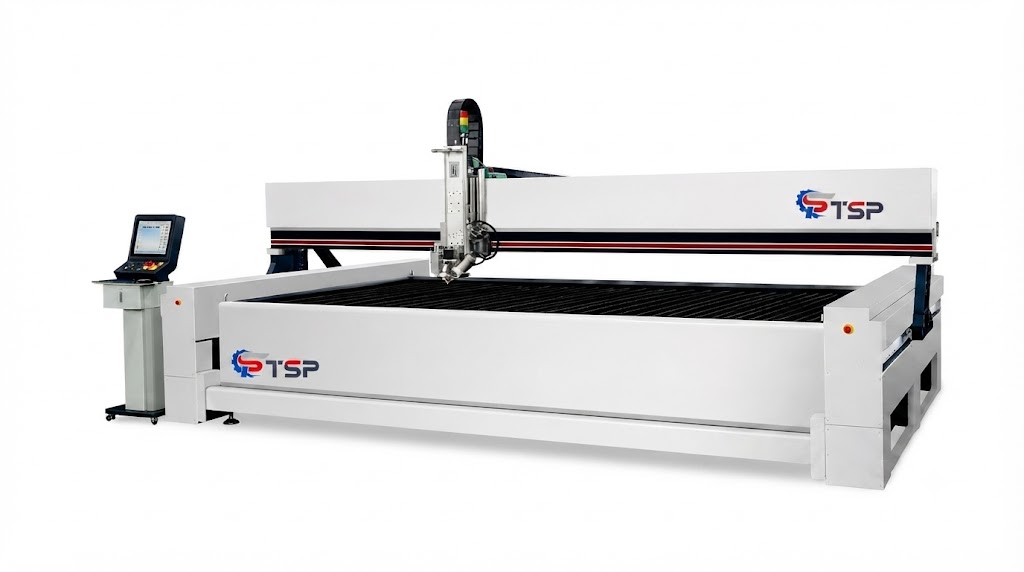
Our product range includes no-teaching welding robots, collaborative welding robots, laser cutting machines, laser welding machines, and CNC machine tools.
For manufacturers exploring a no-teaching welding robot, TSP can work with you to understand your workpiece characteristics, welding requirements, production workflow, and automation objectives.
Before recommending a configuration, it is important to clarify the required robot travel range, programming functions, welding process, workpiece positioning, and level of automation. These details help determine whether a no-teaching welding robot is suitable for the application and what additional equipment may be required.
Whether you are upgrading an existing welding line or evaluating robotic welding for a new production process, choosing the right automation approach begins with a clear understanding of your manufacturing needs.
Frequently Asked Questions About No-Teaching Welding Robots
What is the difference between a no-teaching welding robot and a collaborative welding robot?
A no-teaching welding robot describes a programming approach intended to reduce conventional manual robot teaching. A collaborative welding robot describes a robot designed for collaborative applications, subject to its safety-rated functions and the overall application risk assessment.
These terms describe different characteristics. A robot may support one, both, or neither, depending on its design and configuration.
Does a no-teaching welding robot require programming?
Yes, in most applications some form of programming or path generation is still required. The difference is that the system may use software, CAD data, automatic path planning, or supported sensing technologies to reduce manual point-by-point teaching.
Can a no-teaching welding robot weld different workpieces?
Potentially, yes. Its flexibility depends on the programming software, workpiece data, sensing capabilities, fixtures, and welding process. Each new workpiece must be validated to ensure that the robot can reach the required joints and achieve acceptable weld quality.
Is a no-teaching welding robot suitable for small-batch production?
It can be a good candidate when manufacturers frequently change workpieces and spend significant time on robot programming. However, the economic benefits depend on setup time, production volume, workpiece complexity, and integration costs.
Does a no-teaching welding robot eliminate the need for skilled welders?
No. Welding process knowledge, quality control, equipment setup, safety management, and program verification remain important. The technology is intended to reduce certain programming burdens, not eliminate the need for qualified personnel.
Start Your Welding Automation Project with TSP
The future of welding automation is moving toward more flexible programming, more efficient production preparation, and better integration between robotics and manufacturing processes.
A no-teaching welding robot can help suitable manufacturers simplify robot programming and respond more efficiently to changing production requirements.
Looking for a no-teaching welding robot for your factory? Contact TSP to discuss your workpieces, welding process, and automation requirements. Our team can help you evaluate a suitable solution for your application.
TSP — Your Partner in Industrial Automation.